Week 5: Unlocking Your Healing Potential

It’s Week Five of the Health Shift Book Club!
We’re talking about chapters 12-13.
View Week Five’s live session recording from September 2nd
here!
Welcome, everyone!
This week we’re getting into lifestyle interventions, featuring one of my favorites: the Core 4.
If you’re just joining us, hello there. I’m the author, Dr. Alice Burron. You can catch up on last week’s notes here.
If you didn’t read this week’s chapters in their entirety, no worries at all…. we’re breaking it down in the Quick Read Notes below! We’ll be discussing this week during the Live Session on September 2 at 12:00pm MST.
Let’s take a look at lifestyle, shall we?
I wrote this section because I became increasingly aware that we often treat lifestyle, complementary, and medical approaches as if they are competing philosophies instead of complementary tools. Conversations about health can become polarized, with people feeling they have to choose one path over another. I don't believe that's how health works. Each approach has unique strengths, limitations, and situations where it can be incredibly valuable. The real opportunity lies in understanding when—and how—to use them together.
More than anything, I wanted this section to leave you with hope. When you understand the broader landscape of health interventions, you realize there are often more options than you first imagined. Lifestyle, complementary, and medical approaches each add valuable tools to your toolbox, empowering you to respond more thoughtfully to whatever health challenges come your way. Health isn't about choosing sides—it's about choosing wisely.


Chapter Twelve: Lifestyle Interventions, Part One: The Core 4
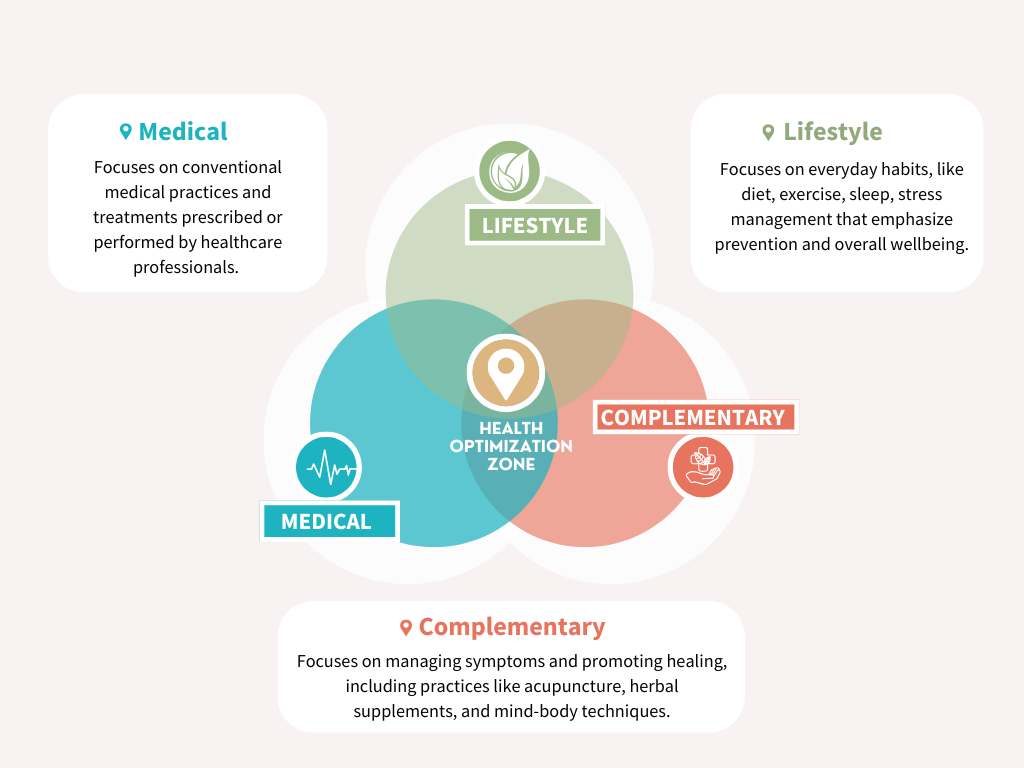
With these last two weeks of the book club, we’re going to talk about the three key approaches to health: lifestyle, complementary, and medical interventions.
These categories represent distinct yet interconnected pathways to healing and achieving optimal health.We call the intersection of all three approaches the Health Optimization Zone.
You might be familiar with a lot of the interventions we’re going to mention here. Yet we tend to see them as separate options rather than a piece of the larger health puzzle. Each have strengths and limitations. Understanding when to use each approach (or, even better, combine them) can dramatically change the outcome of your health journey.
This week, we’re going to turn our attention to Lifestyle Interventions.
Lifestyle interventions are often overlooked, dismissed as too slow or subtle to address serious health concerns. These interventions require time for results to become visible. But these small, positive changes can compound over time, and can be one of the strongest factors in improving our health.
Lifestyle interventions can increase the effectiveness of other decisions, as well as stand alone. Let’s take a look at the four strongest pillars… the Core 4.
The Core 4: The Ultimate Foundational Lifestyle Intervention
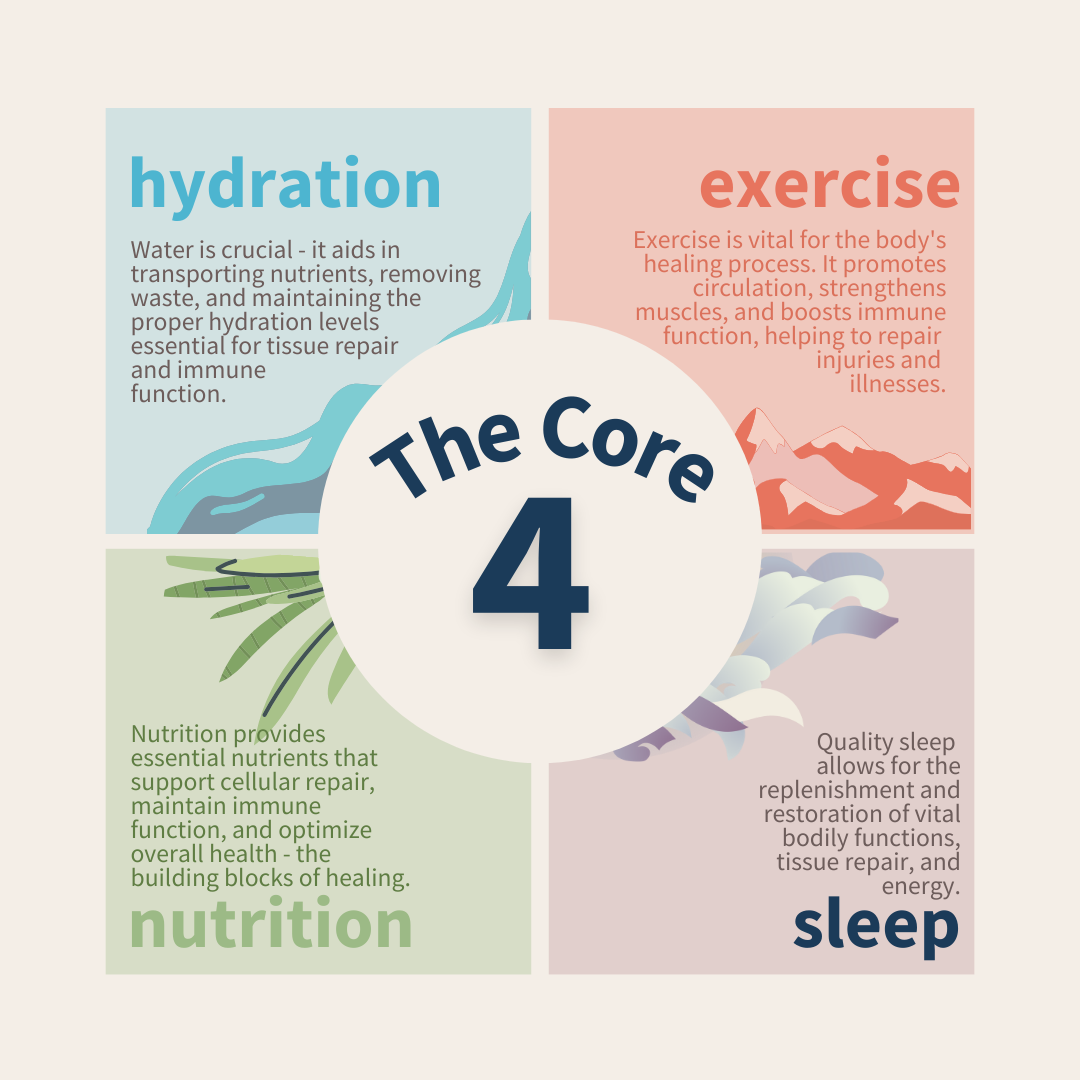
There are dozens of foundational interventions, but there are four that stand out. I’m talking about the Core 4: Hydration, Exercise, Nutrition, and Sleep.
They are essential to life, the bedrock of our health. That means improving any of them immediately, foundationally improves our health — no matter where we are in our health journeys.
In fact, we did an entire webinar on the Core 4 that deep-dives into each of these four pillars. You can watch it here!
Hydration. Water serves many critical functions in the body: temperature regulation, digestion and nutrition regulation, joint lubrication, circulation… the list really goes on.
Skin health even depends on hydration. It can make your skin look and feel better, which can even improve your mood.
To stay properly hydrated, listen to your body. Drink when you’re thirsty, and ensure your urine is light yellow or clear, which is a good sign of proper hydration.
Don’t forget there are foods that can add to your hydration as well, like fruits and vegetables high in water and electrolytes. Watermelon and cucumber are great!
Exercise. Your body was meant to move! Exercise isn’t torture, it’s freedom. It allows us to do what we love without limitations, using all of our body — heart, lungs, muscles, and bones. Rotate, stretch, walk, and change your pace.
There are several types of exercise, like aerobic exercise, strength, balance, stretching, and coordination. But the most important thing? Move in ways that inspire you.
Nutrition. This is one of the more personal aspects of the Core 4, but don’t think “diet.” Think “eating smart.” Healthy eating is delicious, and it helps you feel your best while protecting your health. Plus, the social aspect of eating food with others is theraputic and good for us.
There are three things to consider with nutrition:
Food quality. Focus on foods that nourish rather than harm. Read labels, research the nutrients in your food, and decide for yourself where you stand on topics like GMOs. It’s not about obsessing over the details, it’s about simply being mindful.
Food quantity. The amount you eat plays a critical role in health, and it’s all about finding the right balance for your body. Ideally, your energy intake should align with your activity level. It’s important to note that both overeating and undereating can have negative effects — and our bodies have ways of letting us know when we’ve gone too far in either direction. Maintain balance over time, not striving for perfection.
Timing. What and when you eat are both important factors in maintaining optimal health. Pay attention to how different foods and meal patterns affect your energy and well-being! Different macronutrients affect your body at different rates, and different bodies have different responses to when meals are consumed.
Sleep. Sleep is essential for physical repair, cognitive processing, and immune efficiency, reducing the risk of chronic illness and inflammation. It can help prevent chronic disease and cognitive decline, help manage weight, and overall quality of life.
To make a long story short, the Core 4 are the primary pillars of your health journey. While other health behaviors like stress management and spiritual wellbeing are essential for a fulfilling life, these four elements are the basic physiological needs. The same way a table can’t function without legs… you need these basic principals to stay standing!
Chapter Thirteen: Expanding Your Arsenal of Health Tools
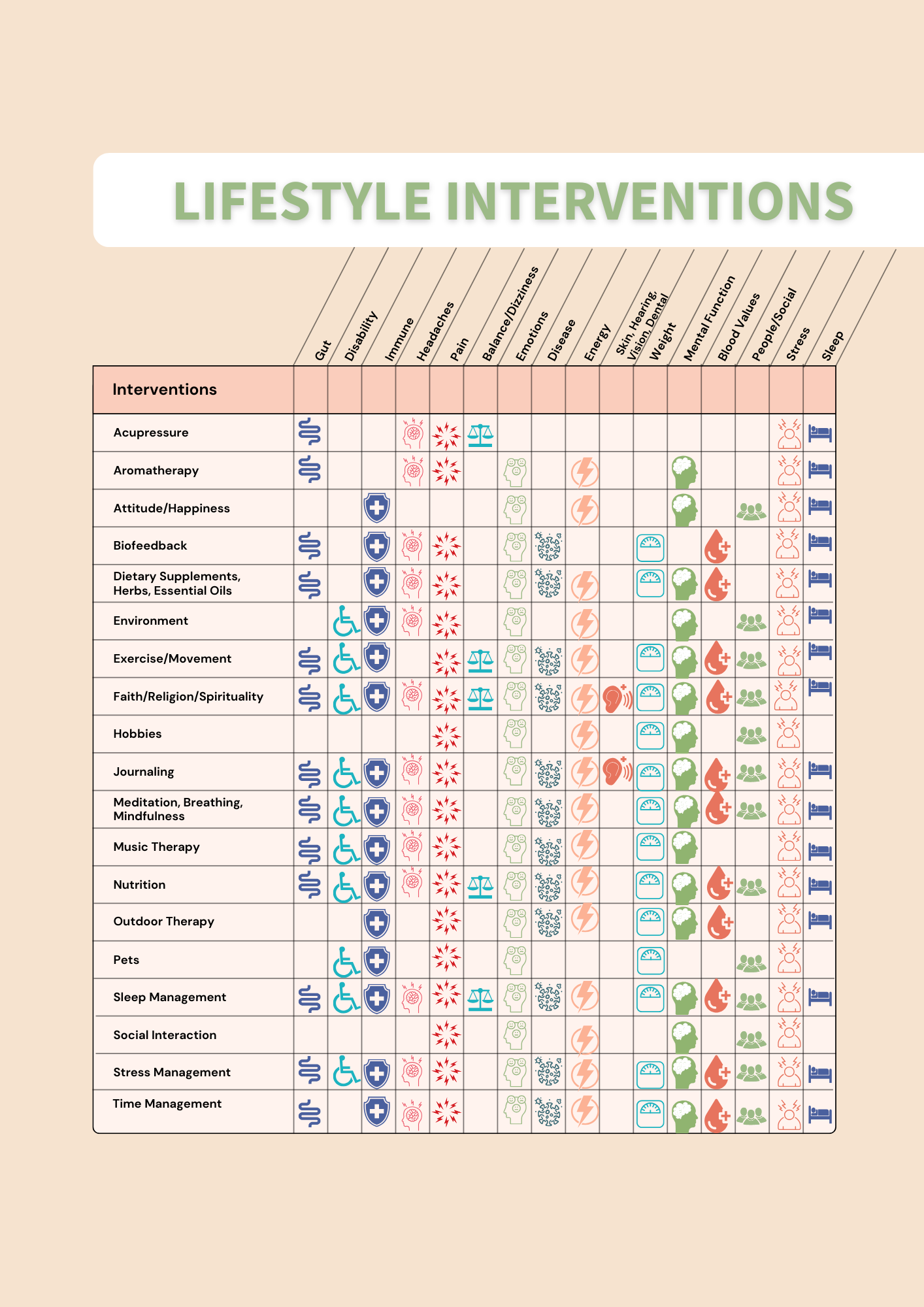
Lifestyle interventions are often the safest, most accessible, and most sustainable tools available for improving health, especially when practiced consistently over time. While nutrition, hydration, exercise, and sleep form the foundation of health, there are many other lifestyle interventions that can help fill gaps in areas such as stress, purpose, connection, peace, and fulfillment. These practices do not need to be dramatic to be effective. Small, daily actions can compound over time and help move our health in a positive direction.
Big Idea: Everyday practices can strengthen physical, mental, and emotional well-being.
Lifestyle approaches don’t have to be big or extreme. Sometimes, they sound downright cliche… but that doesn’t mean they’re any less effective.
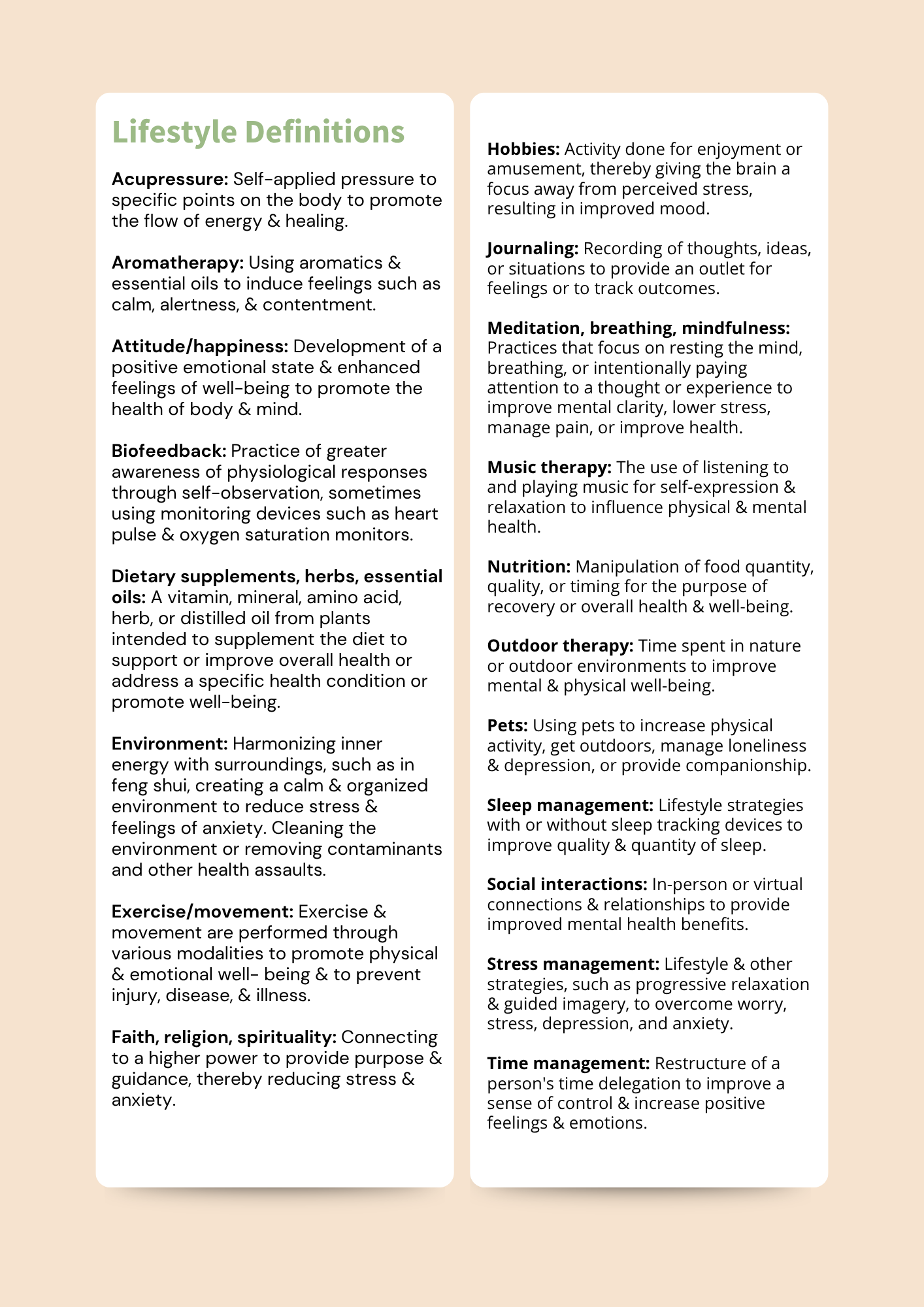
If you’d like to take a closer look at some lifestyle intervention ideas, download the free resource below. We call it the What To Do Next Guide, and it dives in a little deeper into resources in lifestyle, complementary, and medical approaches.
We’ll be looking at Complementary and Medical in next week’s chapters!
See you then.