Week 6: Building Your Personalized Healing Strategy
It’s Week Six of the Health Shift Book Club!
We’re talking about chapters 14-16.
View Week Six’s live session recording from September 9th
here!
Welcome, everyone!
It’s the final week of the book club and I’m glad you’ve stuck with it for these past weeks.
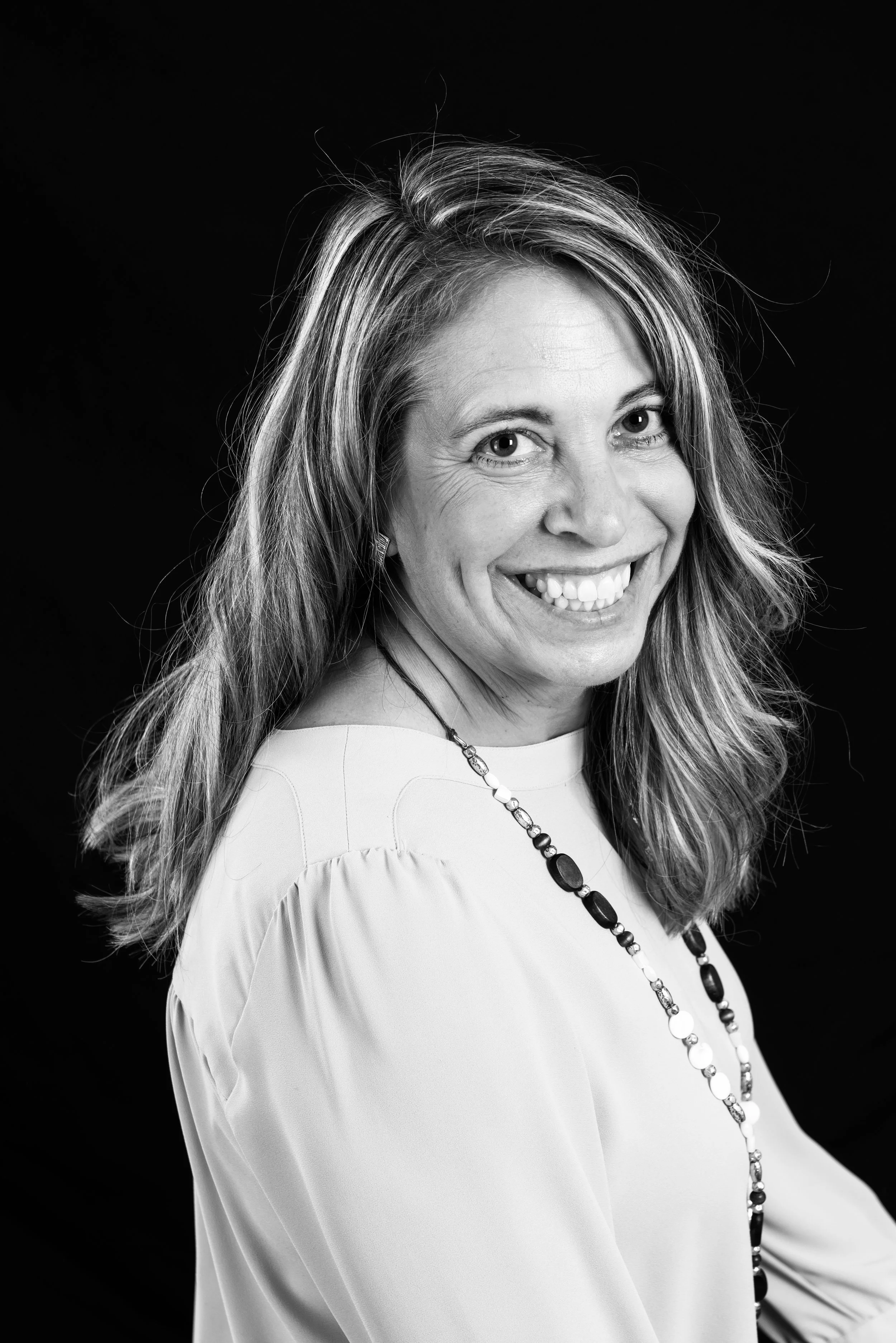
If you’re just joining us, hello there. I’m the author, Dr. Alice Burron.
If you didn’t read this week’s chapters in their entirety, no worries at all…. we’re breaking it down in the Quick Notes below!
Let’s put a bow on this book club, shall we?
We’ll see you at the final Live Session on September 9th at 12:00pm MST!
As we come to the end of Health Shift, I hope you've discovered that this book was never meant to tell you what to think—it was meant to help you think more clearly. Healthcare is an incredible resource, but like any complex system, it works best when you enter it prepared. Ask questions. Stay curious. Understand your options. Don't be afraid to seek clarification or a second opinion when appropriate. Your voice matters, and you deserve to understand the decisions you're making about your health.
Perhaps the greatest lesson I hope you'll carry with you is that your health deserves intention. Rather than reacting to whatever comes your way, create a thoughtful plan, adjust it as you learn, and keep moving forward. This is your journey—one unlike anyone else's. There will be setbacks, victories, uncertainty, and growth along the way. But if you approach it with curiosity, perspective, and a willingness to learn, you'll become a stronger navigator of your own health. In many ways, Health Shift is simply an invitation to begin the great experiment of you.
Chapter Fourteen: Getting the Most from Conventional Medicine
This section is about learning how to use conventional medicine strategically rather than automatically. Conventional medicine is undoubtedly powerful, but it is only one tool in a complete health plan.
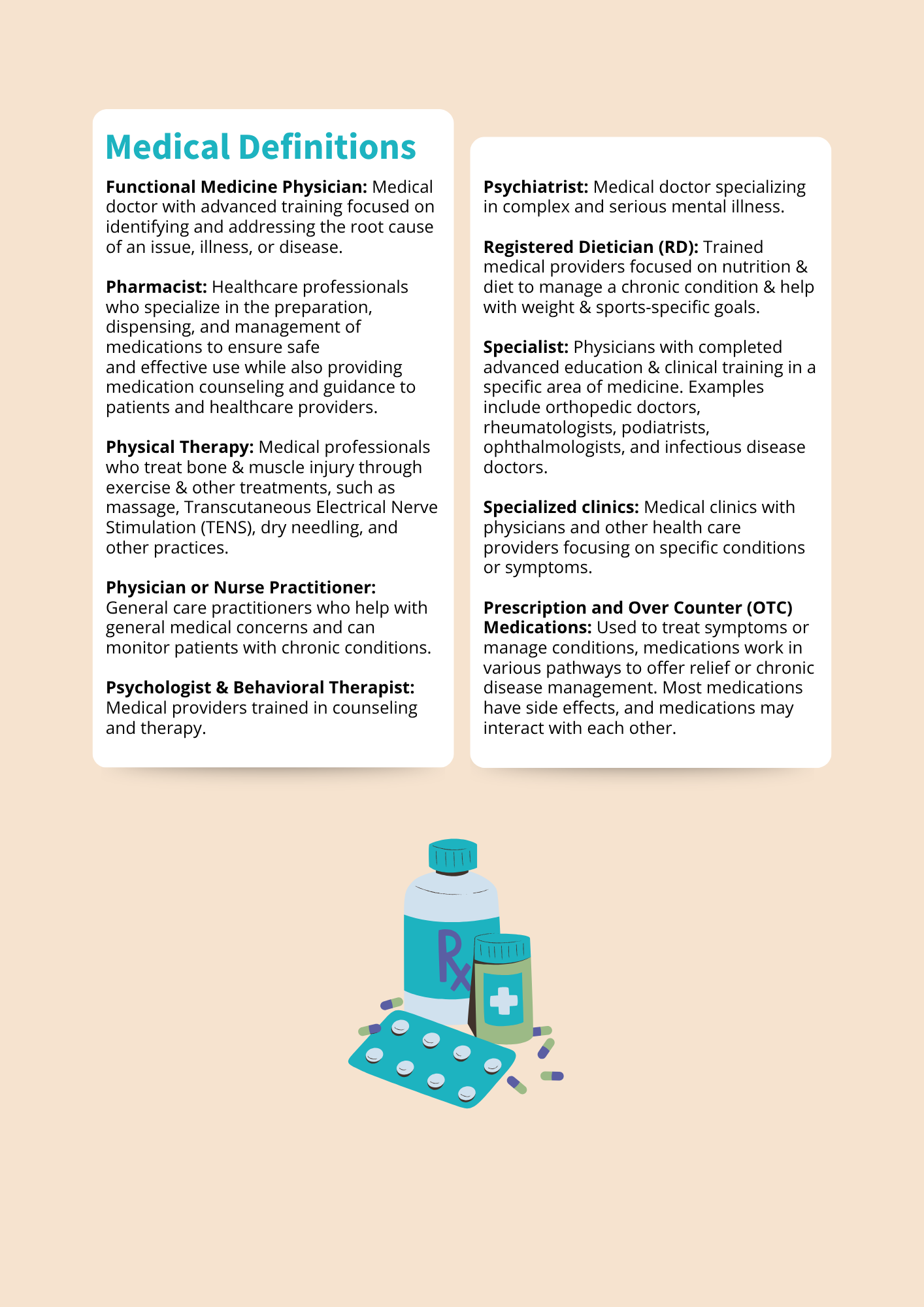
Examples of useful medical interventions can be found below in the the What To Do Next Guide, under the Bonus Resources section.
Conventional medicine is exceptionally effective at managing emergencies, trauma, infections, surgeries, and many acute conditions. When something serious happens, modern healthcare provides life-saving diagnostics, treatments, and interventions that would have been impossible only generations ago. These strengths make conventional medicine an essential part of health care.
However, many chronic health conditions involve factors that extend beyond what happens in a doctor's office. Stress, lifestyle habits, sleep, nutrition, environment, and daily behaviors often influence long-term health outcomes.
Because of this, relying exclusively on medications, procedures, or diagnoses may not always produce the desired results.
A Health Hero understands that conventional medicine works best when combined with other approaches that support overall health and healing.
Big Idea: You are responsible for evaluating and applying medical advice within the context of your own life.
Healthcare professionals are experts in medicine, but they are not experts in your individual experience. They may understand diseases, treatments, and testing, but only you fully understand your history, preferences, lifestyle, stressors, goals, and values. This means health decisions should not be made on autopilot.
Instead, medical recommendations should be viewed as information to consider thoughtfully. Asking questions, seeking clarification, understanding risks and benefits, and considering how recommendations fit into your broader health philosophy are all important parts of the process. The goal is not to reject medical advice, but to become an active participant in decision-making so that the final plan aligns with your unique needs and circumstances.
Chapter Fifteen: Unlocking the Power of Complementary Healing
Complementary healing expands our options by helping us combine medical care, lifestyle change, and alternative approaches into a more complete strategy for improving health.
Big Idea: Complementary healing gives us additional tools when conventional medicine isn't enough.
Many people eventually find themselves frustrated by symptoms that don't seem to improve despite medical appointments, testing, and treatment. Others receive a diagnosis but are left with little guidance beyond symptom management or lifelong medication. This doesn't mean conventional medicine has failed—it simply means it may not be the only tool we need.
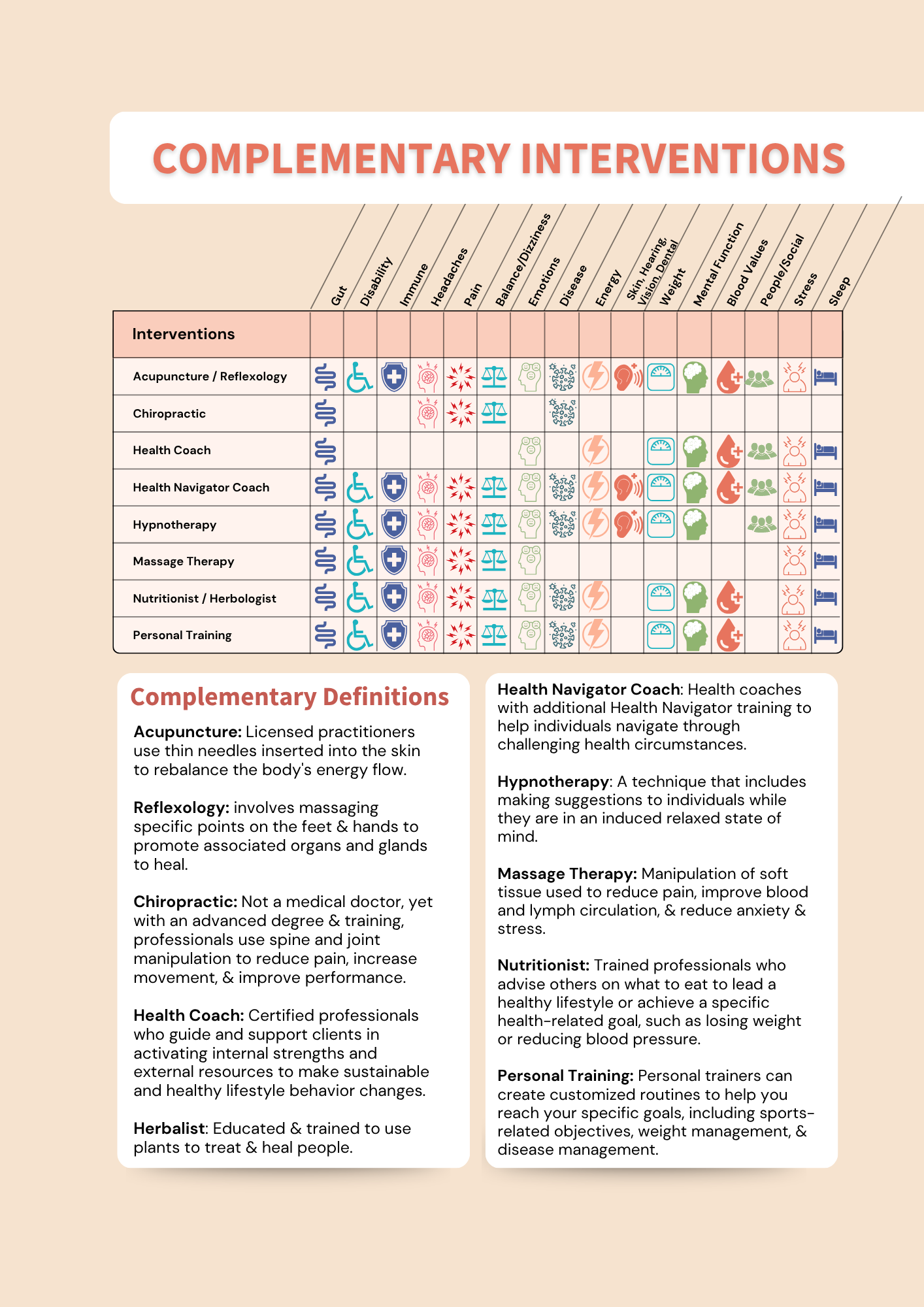
Examples of useful complementary interventions can be found below in the the What To Do Next Guide, under the Bonus Resources section.
A blended approach often works best. Medical interventions can be invaluable for diagnosis, emergencies, and symptom control, while complementary approaches may help us explore additional ways to support healing. Whether that means acupuncture, massage, mindfulness, herbal medicine, nutrition, or another modality, the goal is not to reject conventional medicine but to broaden the range of options available to us.
The key is remaining curious, evaluating interventions thoughtfully, and working with qualified practitioners. Complementary healing should earn our trust through experience and results, just as any other health intervention should.
Big Idea: Health improves when we address the whole picture instead of chasing a single solution.
Health concerns rarely develop in isolation. Stress, work demands, relationships, environment, movement, nutrition, beliefs, and emotional well-being all influence how we feel. When we focus only on the symptom, we may miss the conditions that allowed the symptom to develop in the first place.
Rather than asking, "Which intervention is the answer?" a more useful question is, "How can these interventions work together?" Medical care, lifestyle changes, and complementary therapies each address different pieces of the puzzle. As we begin layering them together, they create momentum toward healing that no single intervention could achieve alone.
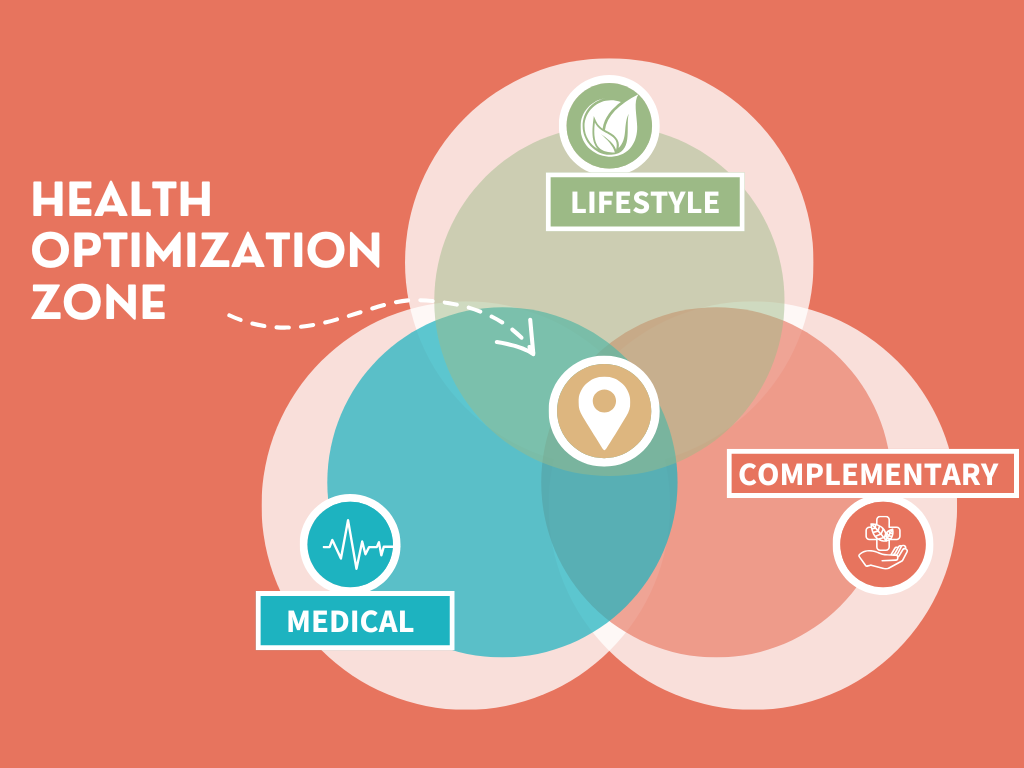
This is the foundation of the Health Optimization Zone—the overlap between medical, lifestyle, and complementary interventions. Instead of viewing these approaches as competing philosophies, we can think of them as partners. Medical interventions help us understand and manage disease. Lifestyle interventions create the foundation for health. Complementary therapies provide additional support and opportunities for healing.
The goal isn't choosing one path over another. The goal is building a thoughtful combination of tools that helps us work smarter, not harder, in pursuit of better health.
Chapter Sixteen: Creating a Healing Action Plan Just For You
Healing happens when you move from confusion to action by creating a personalized plan, choosing interventions strategically, tracking your progress, and believing that improvement is possible.
Big Idea: Action creates change!
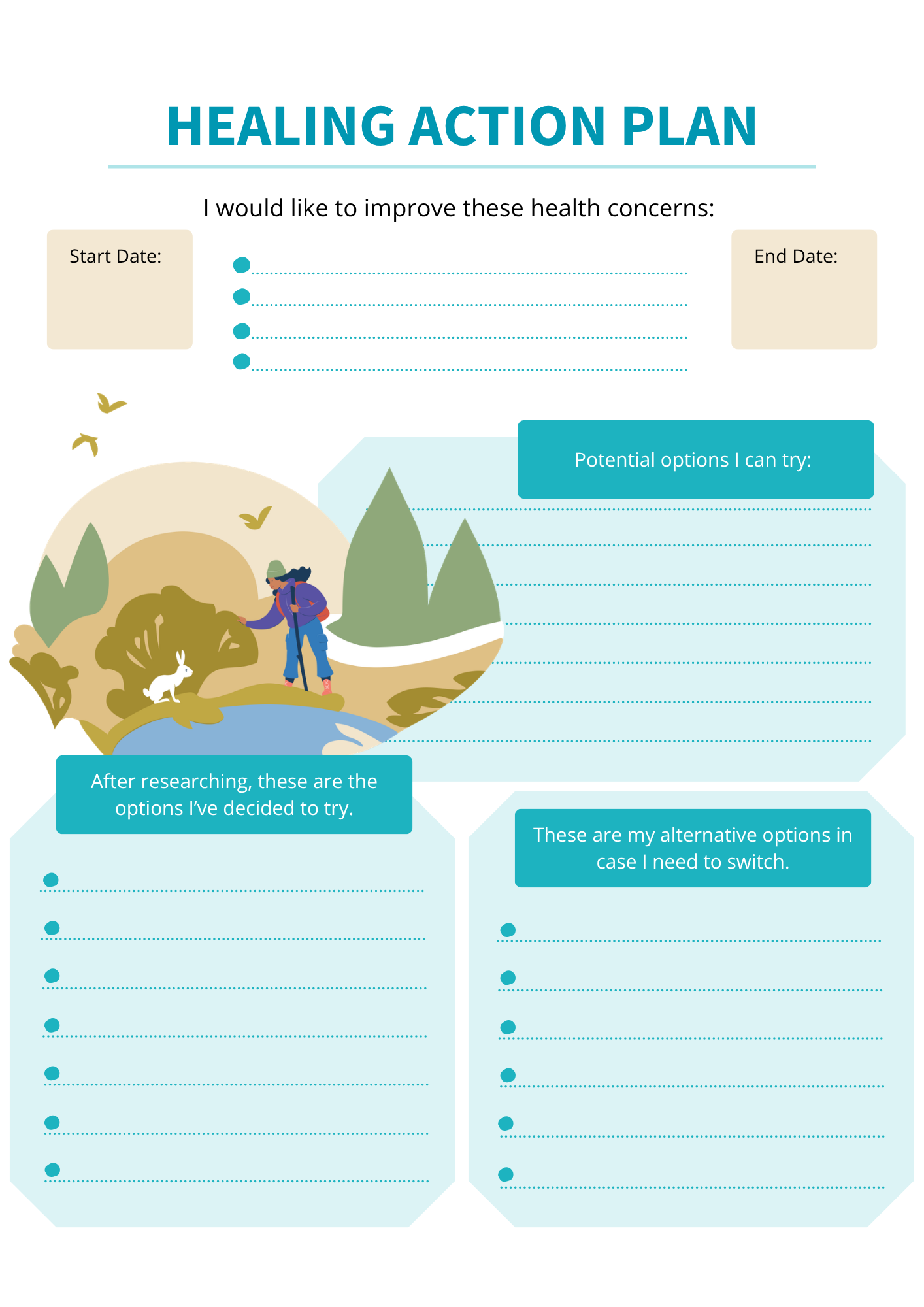
Knowledge alone doesn't create change—action does. The next step is building a Healing Action Plan that turns your health philosophy into a practical roadmap. Start with a clear health goal, whether you're resolving a specific concern or working toward a fitness or nutrition objective.
Then explore possible interventions through the lens of CREECS—commitment, risk, effectiveness, effort, cost, and support—and select only one to five options that align with your values, circumstances, and willingness to follow through.
There is no single “right” intervention or perfect path to healing. The goal is to make thoughtful decisions, commit to a reasonable course of action, and remain flexible enough to adjust as new information emerges.
Big Idea: Decide on interventions based on you.
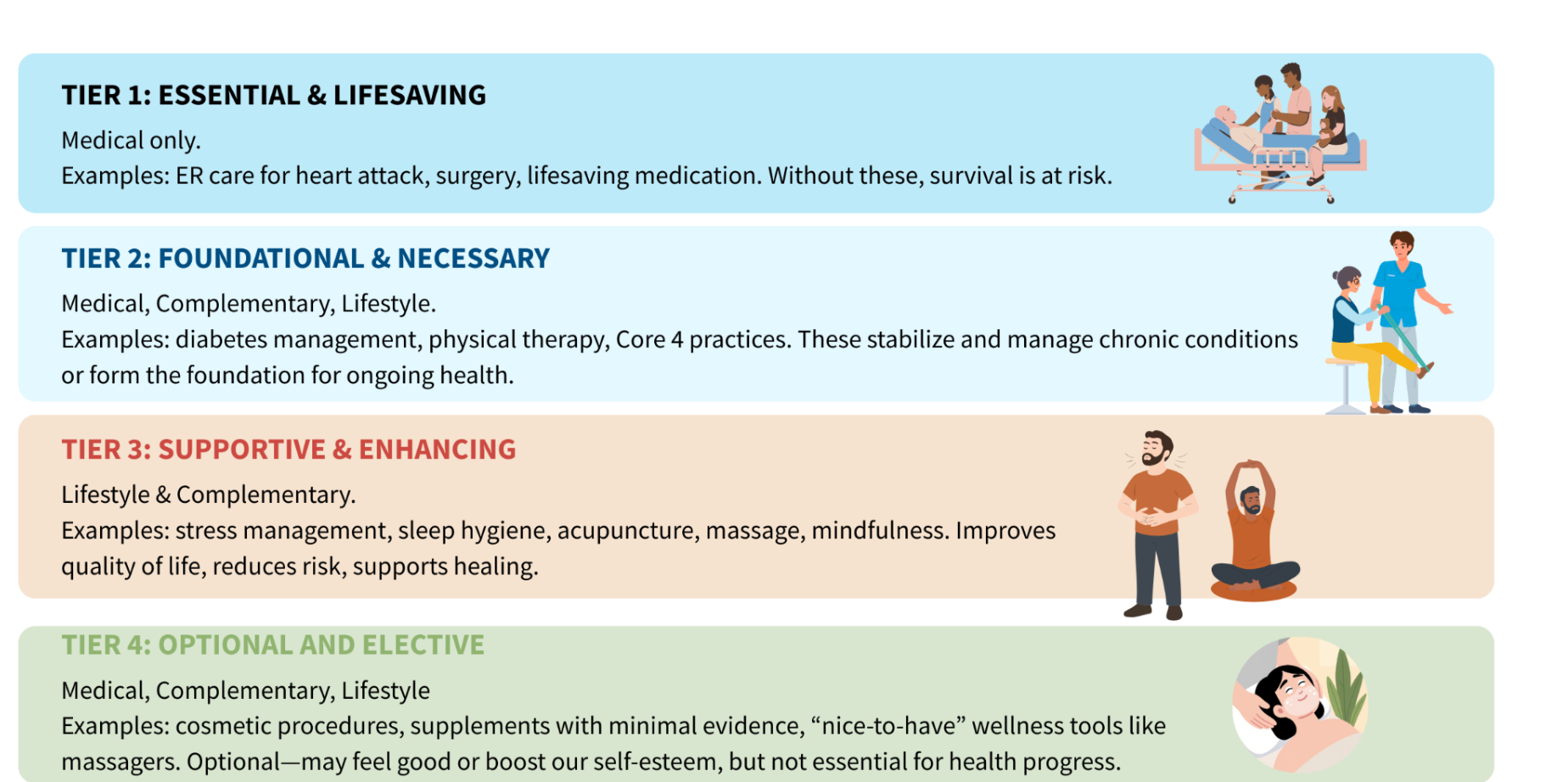
Not all interventions deserve equal attention. Some are urgent and essential, while others are merely optional distractions. Tier 1 interventions address immediate threats and cannot be delayed. Tier 2 interventions are vital for long-term health and include foundational habits like the Core 4: nutrition, exercise, sleep, and hydration. Tier 3 interventions improve quality of life and support well-being, while Tier 4 interventions are often nonessential and should be evaluated carefully before investing time or money.
Progress—not perfection—is the goal.
Tracking transforms guesswork into learning, helping you identify what is actually working. Most importantly, approach the process with the belief that healing is possible. A thoughtful plan, consistent action, objective tracking, and a willingness to keep going create the bridge between where you are today and the health future you want to build.
Conclusion
I want to celebrate with you! This journey is about much more than tackling a specific health condition or reaching a fitness goal. It’s about realizing that you are the hero of your own health. Your story will have a beginning, a middle, and a triumphant end.
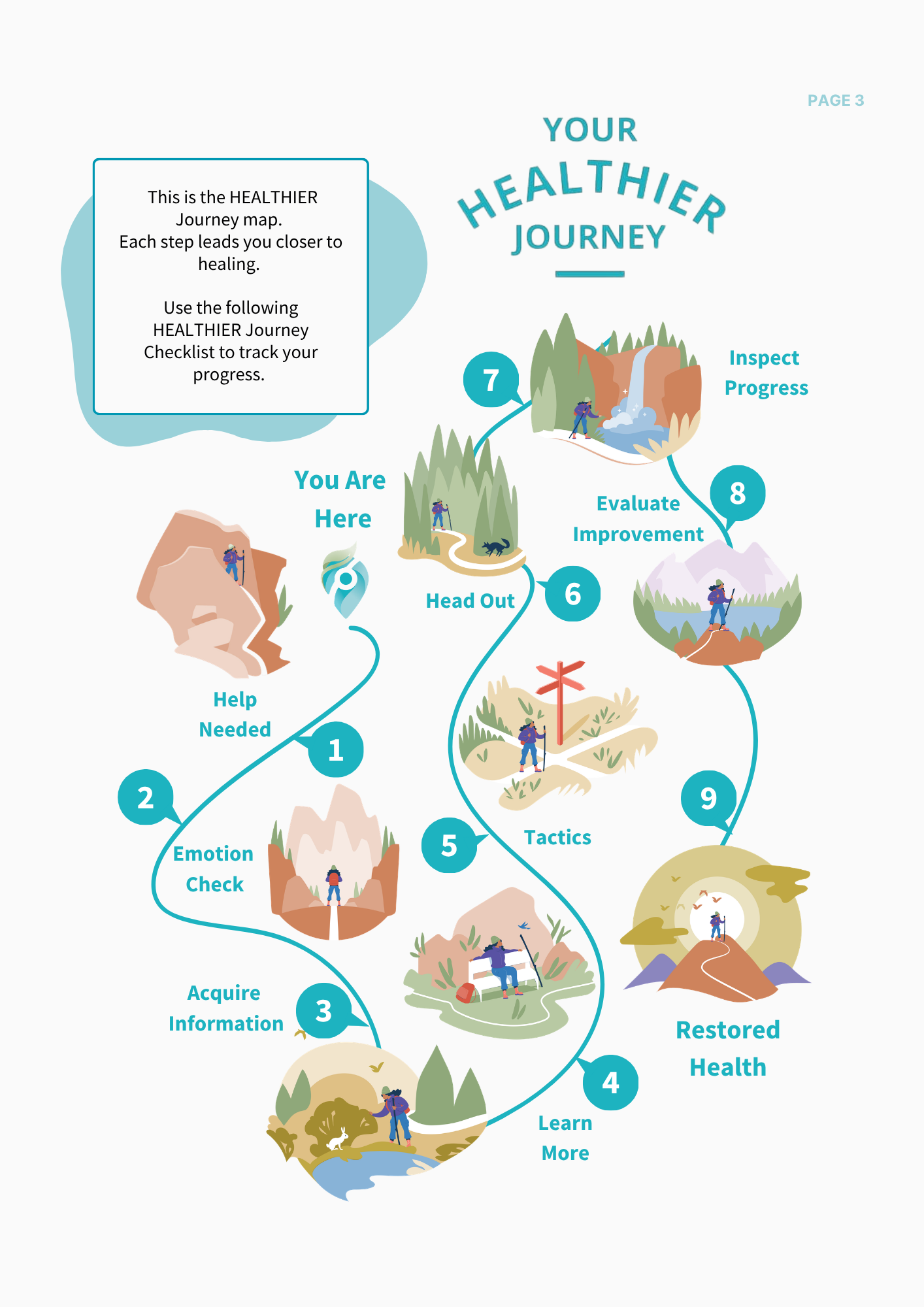
Here’s a zoomed-out road map of the journey we’ve just taken… and one you can take again and again, as our health changes.
The healthcare system and culture may be stacked against you, but by arming yourself with the HEALTHIER journey, you can break free from their pull and old patterns and forge your unique path to healing.
You are not just a one-size, one-solution patient or health consumer — you are a wise and courageous Health Hero! Go forth and be well!
Bonus Resources