Week 4: Designing Your Personal Health Approach

It’s Week Four of the Health Shift Book Club!
We’re talking about chapters 10-11.
View Week Four’s live session recording from August 26th
here!
Have a question/comment? Submit below.
Welcome, everyone!
This week we’re moving from awareness to action. This is the actionable part of your health journey. Roll up your sleeves, because this week, we’re getting practical!
If you’re just joining us, hello there. I’m the author, Dr. Alice Burron.
If you didn’t read this week’s chapters in their entirety, no worries at all…. we’re breaking it down in the Quick Notes below! We’ll be discussing these chapters in this week’s Live Session on August 26th at 12:00pm MST. (Submissions for this week’s questions are now closed.)
Now. Let’s get into it.
I wrote these chapters because I believe one of the greatest skills we can develop is learning to notice. In a world that encourages quick fixes and immediate action, we often skip the most important step: understanding what our bodies are actually telling us. We can become disconnected from our symptoms, overlook patterns, or react before we've taken the time to observe what's happening. My hope is that these chapters help you slow down, become more aware of your health experiences, and put words to what you're noticing. Awareness is where good decisions begin.
I also wanted to remind you that your health journey is personal. As you become more attuned to your body, you'll also begin to recognize your own preferences, values, and comfort level with different health approaches. There isn't one "right" path for everyone. The more clearly you understand both your body and yourself, the more confidently you can choose health strategies that align with your unique needs and circumstances. Sometimes the most powerful thing you can do isn't to act more quickly—it's to pause long enough to see clearly.


Chapter Ten: How Is Your Health…Really?
Strategic health decisions begin with an honest assessment of where you are today, using both your body’s signals and objective information to understand your true health status before deciding what to do next.
Big Idea: Learn to accurately assess your current health.
Health changes over time. Yet many people continue to view themselves through the lens of who they used to be rather than who they are today.
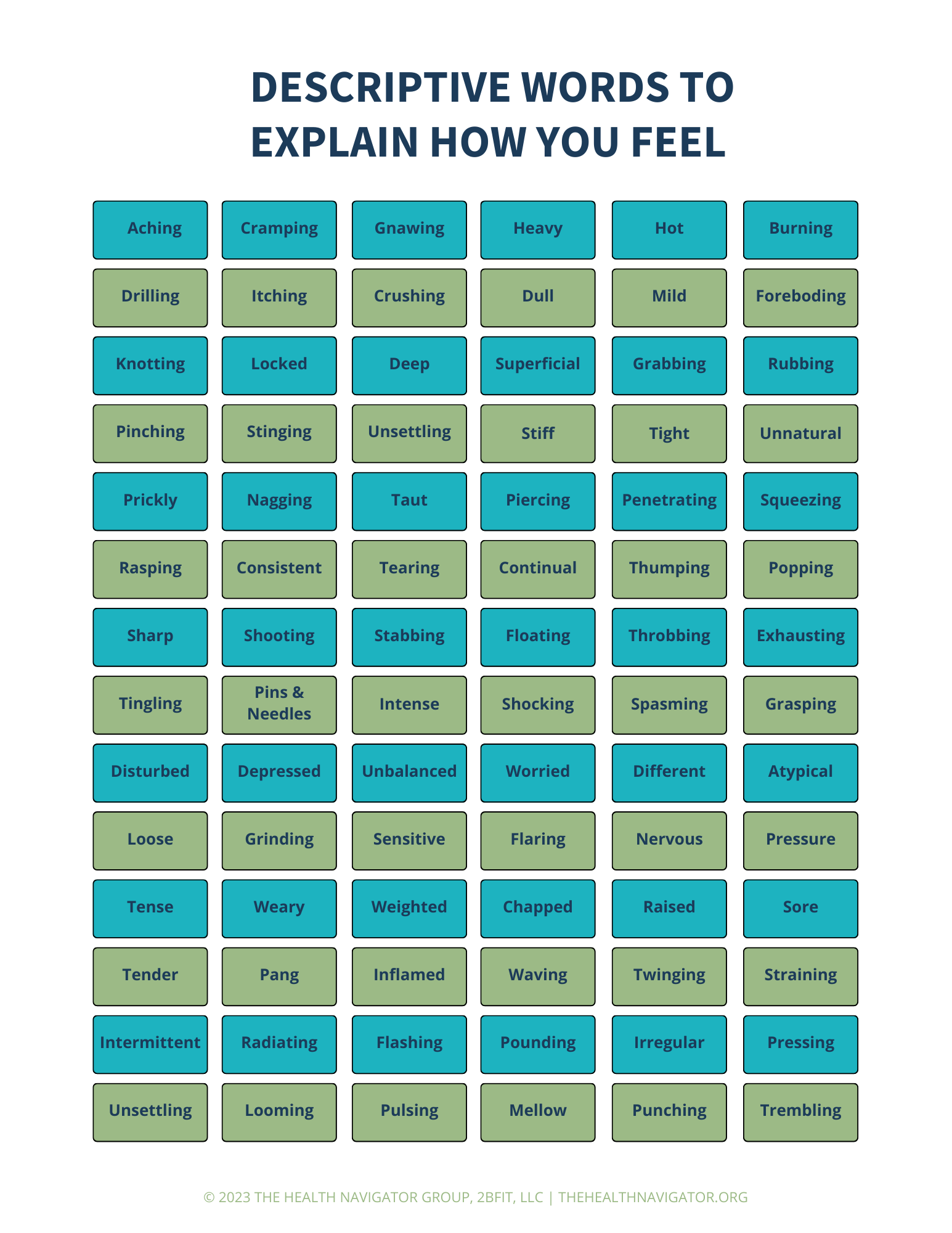
Symptoms, energy levels, blood work, mood, sleep, digestion, immune function, and physical discomfort all provide valuable clues about what is happening beneath the surface. The body is constantly communicating, but those messages are easy to miss when life becomes busy or stressful.
Building health awareness requires both subjective and objective assessment.
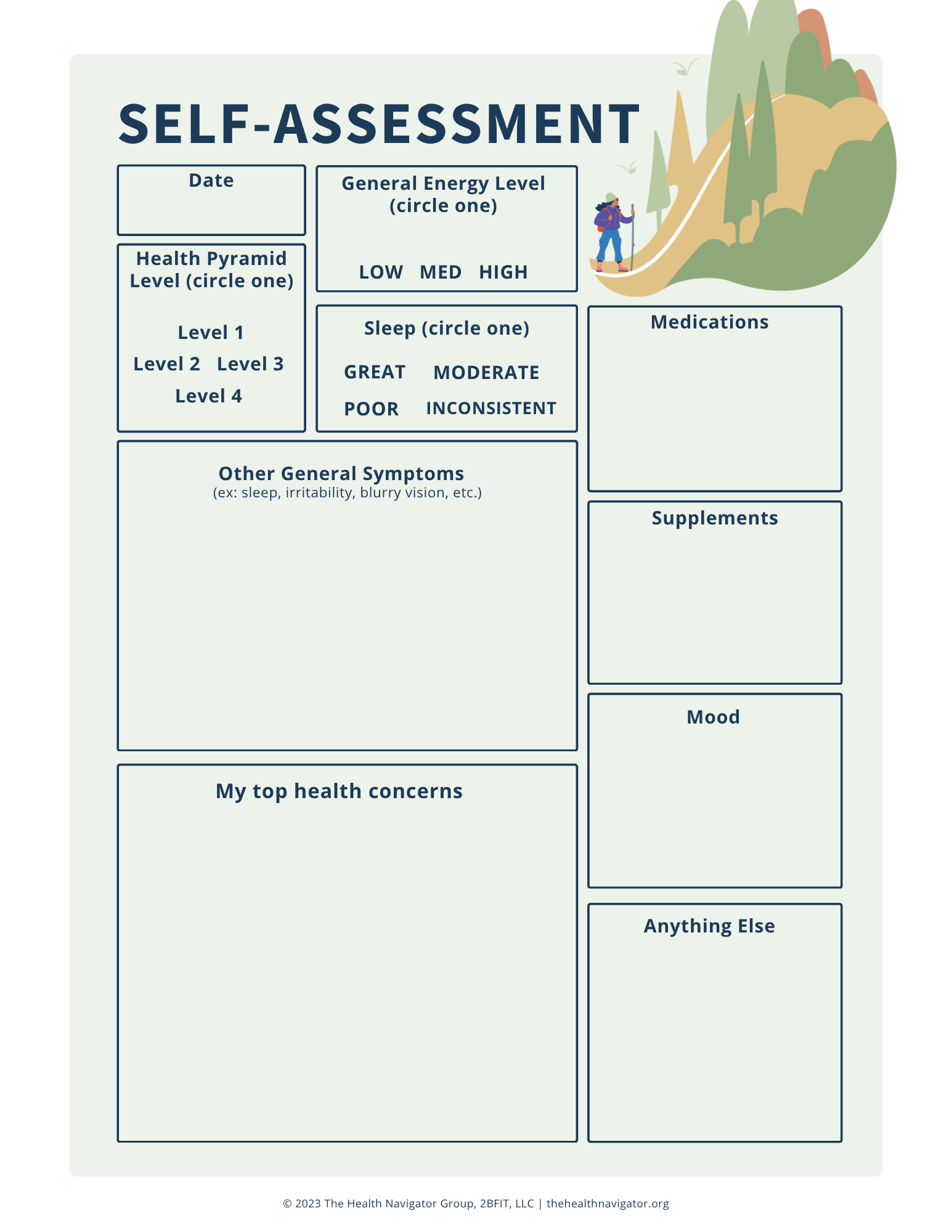
One way to do this is through a full-body scan. A full body scan can help identify subtle pain points, changes in function, and early warning signs before they become major problems.
Just as importantly, symptoms should be described with specific language rather than vague labels. The more clearly a problem can be defined, the easier it becomes to understand, communicate, research, and address.
You can’t solve what you can’t clearly define.
This exercise isn’t just useful for ourselves. Once we’ve defined our situation clearly, we’re able to better communicate with healthcare providers or our collaborative health community to get better, clearer, and faster treatment.
We’ve got a bonus guide you can take right to the doctor’s office — download it here!
Big Idea: Use the Health Spectrum Pyramid to determine the right level of intervention.
Once health has been assessed honestly, the next step is understanding where you fall on the Health Spectrum Pyramid.
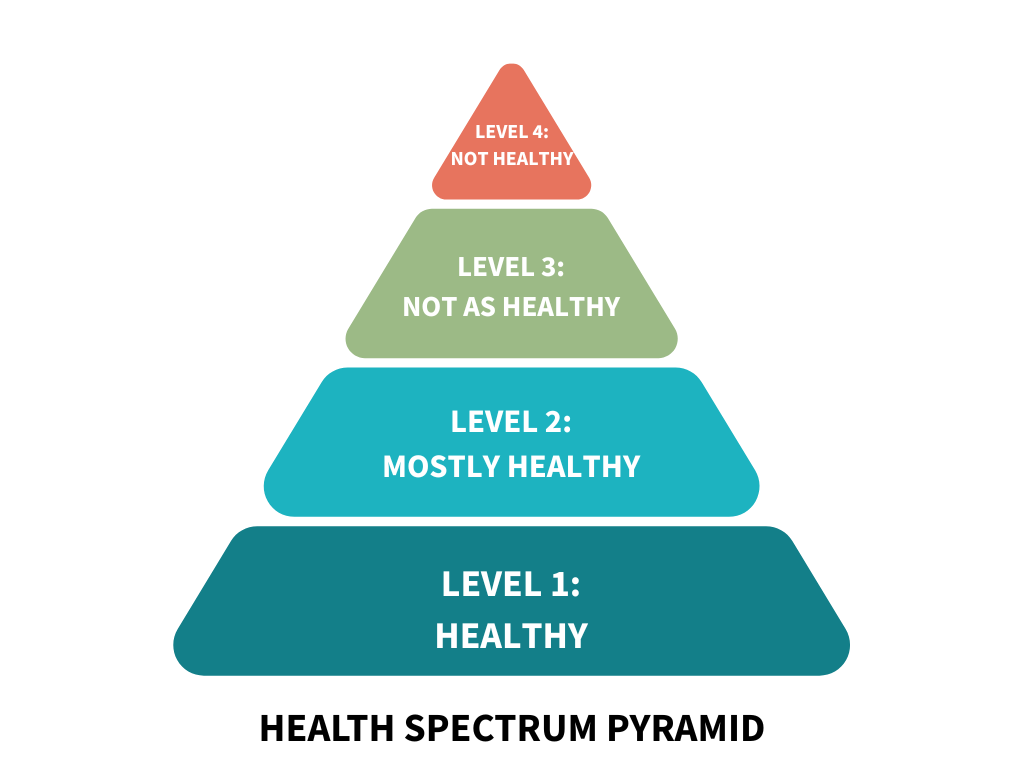
This framework organizes health into four levels:
Level 1 (Healthy)
Level 2 (Mostly Healthy)
Level 3 (Not as Healthy)
Level 4 (Not Healthy)
The goal is not perfection, but clarity. Remember, health shifts and changes throughout our lives, and there will be times when you’re traversing into different levels of health. Knowing your current position helps prevent both overreacting to minor concerns and underestimating serious ones.
Each level calls for a different strategy. To find out where you sit on the pyramid, ask yourself:
Are your symptoms interfering with your daily life? For how long?
How many major health issues do you have?
Are you currently on medications?
Are your symptoms transient, or do they persist throughout the day and night?
How many minor symptoms do you experience?
How difficult would it be to improve your symptoms?
If you’re Level 1, Healthy
You feel great with few health concerns. Though you may occasionally get sick or injured, your health doesn’t limit your lifestyle.
If this is you, celebrate! You should focus on maintaining your health with minimal medical interventions, concentrating on nutrition, regular activity, and mental well-being. I call this “building your health savings account.” The more you invest now, the longer you’ll stay in this optimal state.
If you’re Level 2, Mostly Healthy
You generally feel good, but there are a few symptoms or issues that mildly restrict your life.
Lifestyle interventions will help you maintain your wellness, while medical care can serve as prevention or maintenance. Complementary practices like massage, reflexology, or meditation can also reduce stress and prevent regression.
If you’re Level 3, Not As Healthy
While you feel good sometimes, your health issues or symptoms are frequent and interfere with daily life. Medical interventions are becoming more routine.
If you’re on this level, focusing on lifestyle changes, complementary practices, and medical interventions can help you bounce back. But if you’ve been here for a while, more consistent efforts will be needed to see improvement.
If you’re Level 4, Not Healthy
You don’t feel well most of the time. You may be managing a chronic or advanced condition that requires regular medical care. Your health limits your lifestyle, and those around you are concerned for your well-being.
At this stage, medical care becomes your primary focus. Lifestyle changes and complementary therapies can still support your recovery, however. Collaborate with your medical team to find treatments that align with your health goals.
Chapter Eleven: CREECS + Defining Your Health Approach
Good health decisions require more than knowing your options—they require understanding your own preferences, limits, values, and circumstances before choosing a path forward.
Big Idea: Define your health approach before choosing an intervention.
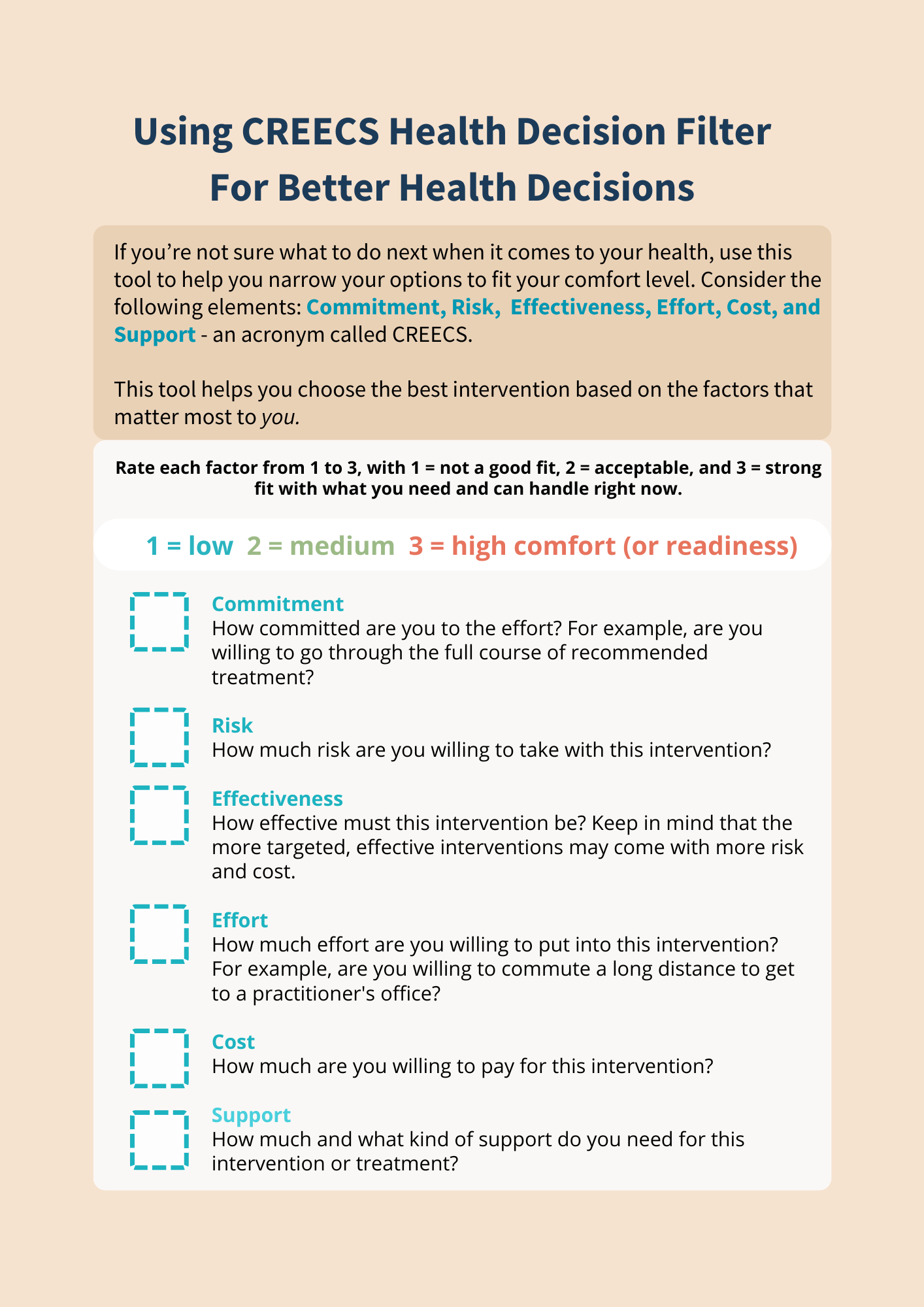
When facing a health decision, it's easy to be influenced by fear, urgency, marketing, or the promise of a quick fix.
Instead of jumping directly to solutions, begin by clarifying what matters most to you.
The CREECS framework provides six questions that help reveal your personal decision-making style and ensure that any intervention aligns with your goals and realities.
CREECS stands for:
Commitment — How dedicated are you to following through long-term?
Risk — How much uncertainty, side effects, or downside are you willing to tolerate?
Effectiveness — How important is achieving the best possible outcome?
Effort — How much time, energy, and lifestyle change are you willing to invest?
Cost — What financial investment feels acceptable?
Support — What level of guidance, accountability, or assistance will you need?
Answering these questions before researching treatments helps narrow your options, prevents impulsive decision-making, and creates a clearer path toward interventions that genuinely fit your life.
Big Idea: There is no universally “best” intervention—only the best fit for your preferences and circumstances.
Different people can look at the same health concern and arrive at very different decisions because they value different things. One person may prioritize effectiveness above all else, while another may place greater importance on minimizing risk, reducing cost, preserving time, or maintaining independence.
By understanding your CREECS profile, you gain a realistic picture of the types of interventions you are most likely to follow through with successfully. An intervention that perfectly matches your preferences is often more valuable than an ideal solution that demands a level of commitment, risk tolerance, effort, cost, or support that you cannot realistically sustain.
Strategic health decisions begin with self-awareness. The better you understand your own priorities, the more confidently you can choose interventions that align with both your health goals and the life you actually live.