Week 3: Understanding Yourself as a Health Decision Maker

It’s Week Three of the Health Shift Book Club!
We’re talking about chapters 7-9.
Welcome, everyone!
This week we’re looking at what is actually quite a fun topic! We’re talking today about how emotions can guide, inform, and strengthen your health decisions.
If you’re just joining us here in Week Three, hello there. I’m the author, Dr. Alice Burron.
If you didn’t read this week’s chapter in its entirety, no worries at all…. we’re breaking it down in the Quick Notes below! We’ll be discussing this chapter and answering your questions during this week’s Live Session on August 19th at 12:00pm MST. Can’t wait to see you there! (Submissions for this week’s questions have now closed.)
Now, let’s take a look.
This section of the book was inspired in large part by my dad, a scientist who taught me the value of thinking tools. He believed tools exist because they help us do things we can't easily do on our own, and I've carried that lesson with me throughout my career. Businesses rely on decision-making tools every day to reduce bias, improve consistency, and make better choices. I began to wonder, "Why aren't we using the same kind of thinking tools to make one of the most important decisions of all—our health?"
Of course, tools aren't the whole story. Every decision we make is filtered through our beliefs, attitudes, experiences, and expectations. Two people can look at the same situation and arrive at very different conclusions because they see it through different lenses. That's why we need both perspective and process. Thinking tools bring clarity and objectivity, while self-awareness helps us understand the lens through which we're viewing our choices. Together, they create a stronger foundation for making thoughtful, confident health decisions.

Chapter Seven: From Personality to Reality
Good health decisions require more than self-awareness—they require practical tools that help turn personality-driven instincts into clear, objective action.
Big Idea: Match the Decision-Making Tool to the Decision
Decision-making tools provide helpful structure. They can help you slow down, organize your thinking, and make choices based on what truly aligns with your goals, values, and priorities.
There are several useful tools, depending on the complexity of the decision:
Pros and Cons List— A simple comparison of advantages and disadvantages that works best for quick decisions or when you need immediate clarity.
Plan-Do-Check-Act (PDCA) Cycle — A method for testing small changes, evaluating results, and adjusting as you go. Ideal when trying something new without making a major commitment.
Force Field Analysis — Compares the factors pushing you toward a decision (driving forces) with the factors holding you back (restraining forces), helping you understand the overall balance of an option.
BRAIN Method — Evaluates the Benefits, Risks, Alternatives, Intuition, and Need for more time before making a choice, combining logic with personal insight.
Decision Matrix — A structured scoring system that ranks options based on criteria that matter most to you, making it especially useful for complex decisions with multiple competing factors.
Each tool offers a different lens for evaluating a decision. The key is selecting the tool that matches the situation rather than relying solely on instinct or habit.
By combining self-awareness with structured decision-making, health choices become less reactive and more intentional. The goal is not to eliminate your personality from the process, but to use decision-making tools to leverage your strengths and compensate for blind spots.
Chapter Eight: Developing Confidence Through Belief and Attitude
Your health journey is shaped by the attitude you bring to it, the belief you have in your ability to heal, and the actions you take to reclaim your power!
Big Idea: Belief and attitude shape how we heal.
If we’re going to maximize our healing potential, we have to recognize the power of attitude and belief. Every health decision is influenced by how we see ourselves, our circumstances, and our ability to recover.
A positive attitude does not magically erase illness, but it can help us engage in health-promoting behaviors, recover with more confidence, and stay committed when the journey gets difficult.
Believing in yourself can be understood through three key components:
Self-esteem, your overall sense of worth and how much you value yourself.
Self-efficacy, your belief in your ability to accomplish specific tasks and overcome challenges.
Self-agency, your belief that you have control over your actions and the outcomes in your life.
Together, these shape how we approach health challenges. When we believe we are worthy, capable, and able to influence our circumstances, we are more likely to take action.
When we feel powerless, incapable, or undeserving, we may hesitate, avoid care, or give up too soon.
Big Idea: Confidence grows when we take action.
Confidence is not something we wait around for. It is something we build through small, repeated actions. We can strengthen self-efficacy and self-agency by gathering knowledge, visualizing success, tracking progress, seeking support, learning from setbacks, celebrating achievements, and taking action before we feel perfectly ready.
Even small steps matter: staying hydrated, taking short walks, practicing mindful eating, setting a bedtime routine, or preparing one healthy meal. These actions remind us that we have more control than we may have realized.
Circumstances may overwhelm us, but we still have control over our actions.
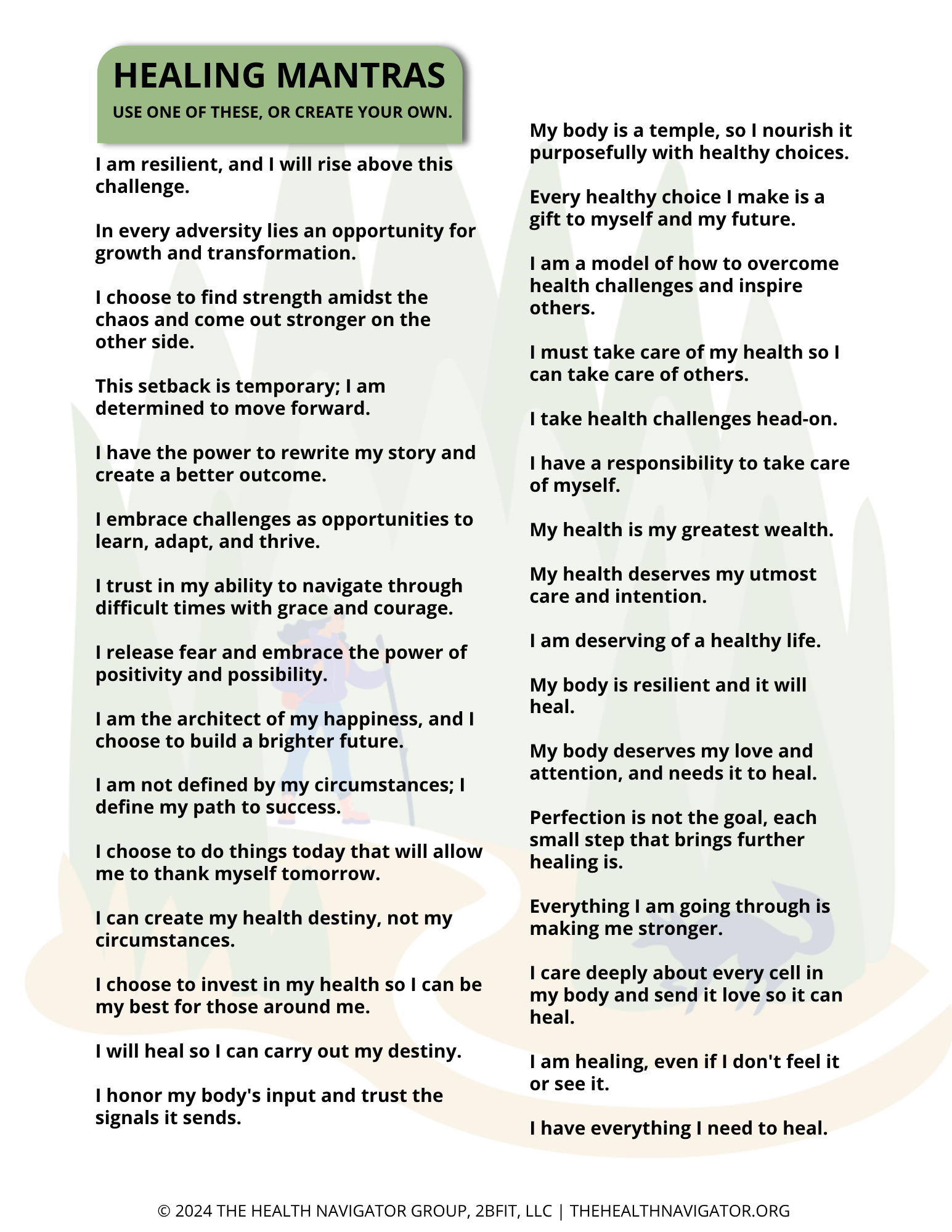
Spirituality, prayer, and healing mantras can also reinforce confidence and resilience. Repeated healing thoughts such as “my body is equipped to heal” or “I am healing even if I don’t feel or see it” can help shift the mind from fear and uncertainty toward hope and determination.
Ultimately, it comes down to one question: Do you believe you can heal? When we shift our attitude toward what we can do, quiet the inner critic, and trust the Health Hero within us, we become active participants in our own recovery.
Chapter Nine: Understanding the Emotional Side of Health
Emotions are not obstacles to your health journey, although it can sometimes feel that way. Instead, they are signals that can guide, inform, and strengthen your decisions when you learn to recognize and name them.
Big Idea: Naming your emotions gives you power over them.
Every health challenge brings emotions with it, and those emotions influence the choices we make whether we recognize them or not. Fear, sadness, anger, anxiety, grief, hope, and courage all shape our behavior, our decision-making, and our ability to heal.
By paying attention to our emotions, we can identify patterns, anticipate difficult moments, avoid impulsive decisions, recognize when our body needs rest, and show ourselves greater empathy.
Emotions become especially useful when we learn to name them precisely rather than treating them as a vague sense of distress.
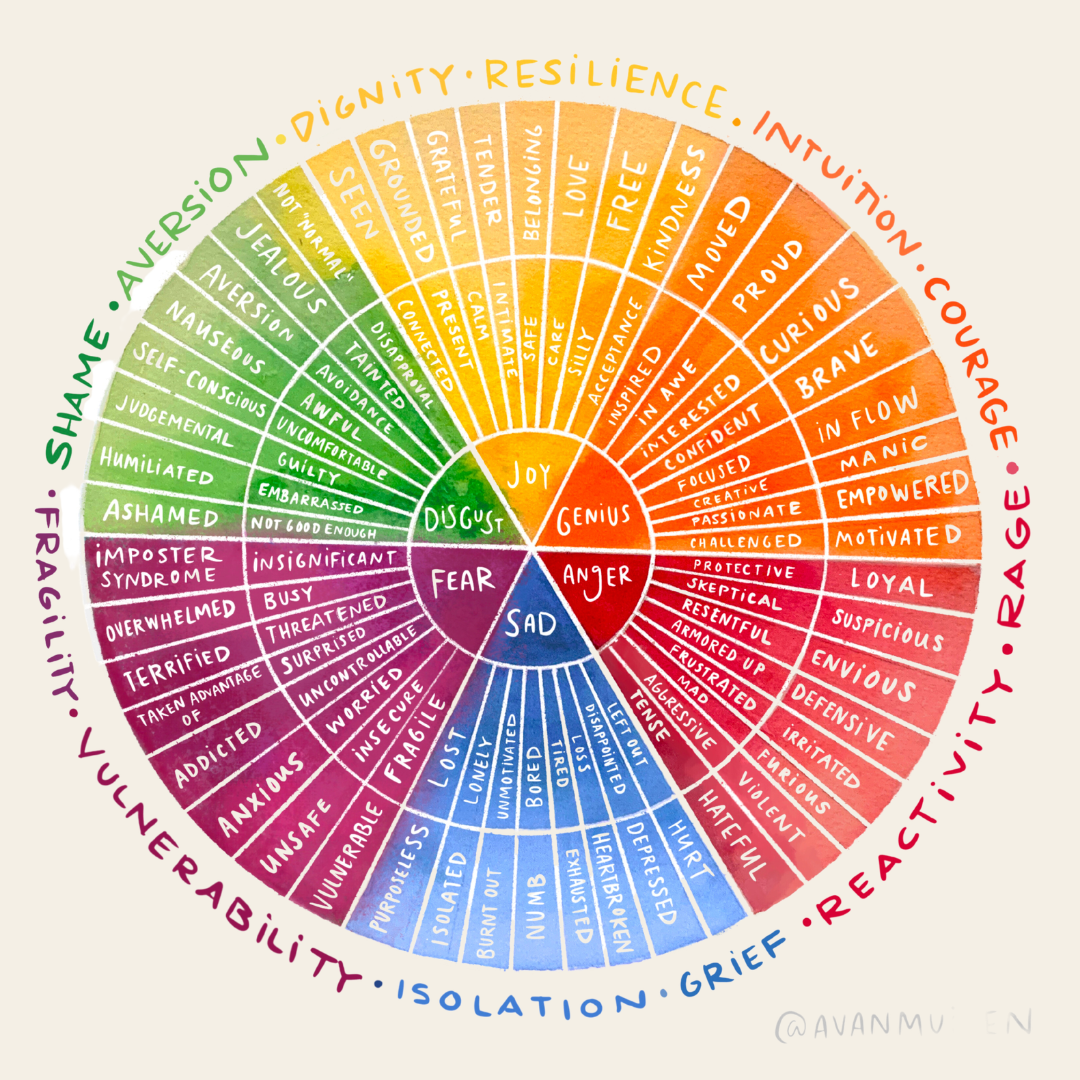
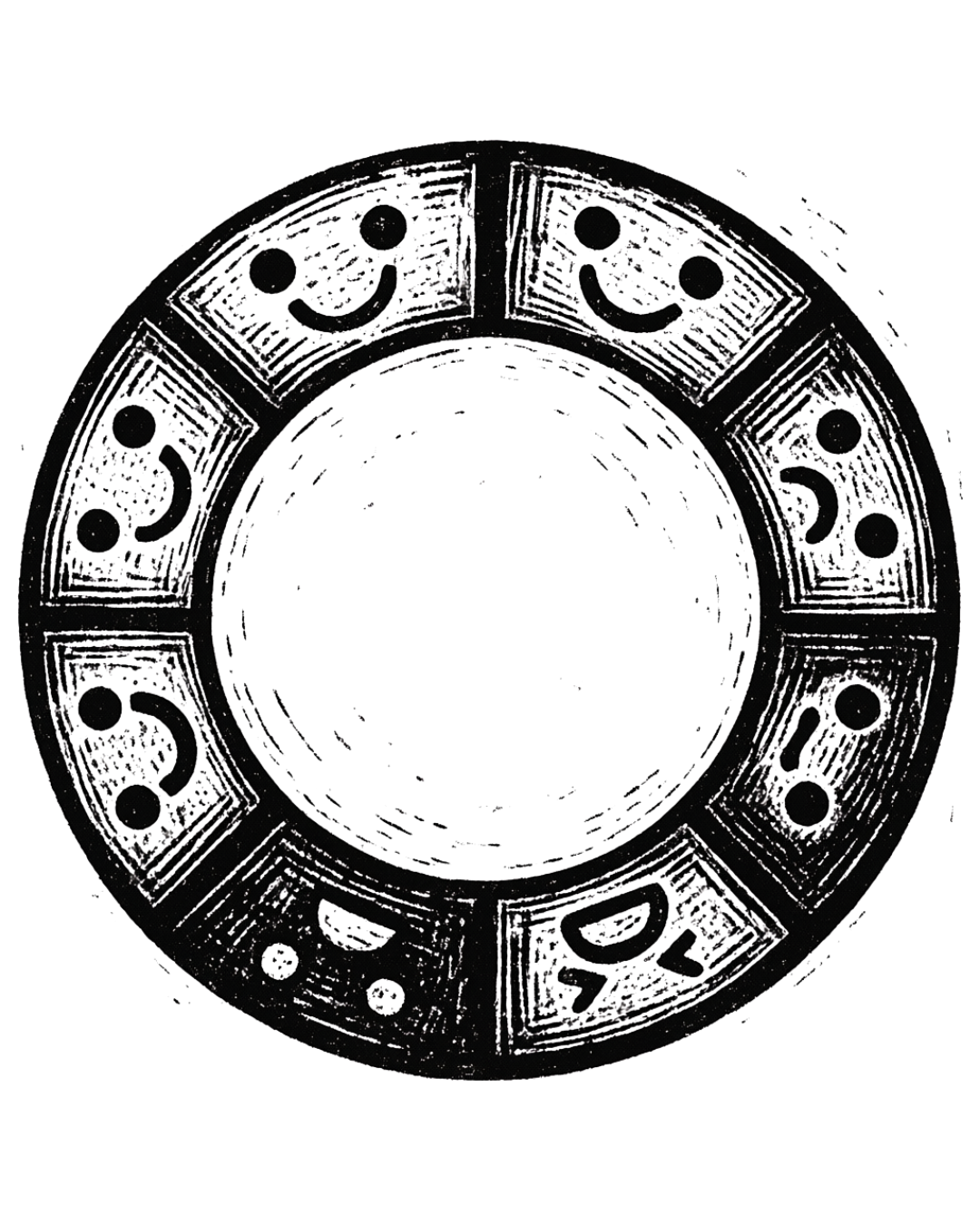
A key tool for this process is the Emotion Wheel, which helps us move from broad feelings to more specific emotional experiences.
Primary Emotions: happiness, sadness, anger, fear
Secondary Emotions: more specific emotions that branch from the primary feelings
Tertiary Emotions: highly detailed emotional descriptions that help identify the true source of distress
Once we can accurately name what we are feeling, we can begin asking better questions about why we feel that way and what resources, support, or actions might help us move forward.
Big Idea: Emotional intelligence helps us make better health decisions.
Strong health decisions require more than knowledge, they require emotional intelligence. Yep, I said ‘require.’ We can’t make good health decisions without this information!
The first half of emotional intelligence is learning to recognize, understand, and manage our own emotions.
The second half is understanding the emotions of others so we can better navigate relationships, healthcare interactions, and sources of influence.
Rather than suppressing difficult emotions, acknowledge them. Listen to the message they are trying to communicate, and then intentionally guide yourself toward emotions that support healing.
There are lots of ways to do this, like by gathering evidence, seeking encouraging stories, engaging with spirituality, surrounding ourselves with positive people, and building habits that strengthen emotional resilience.
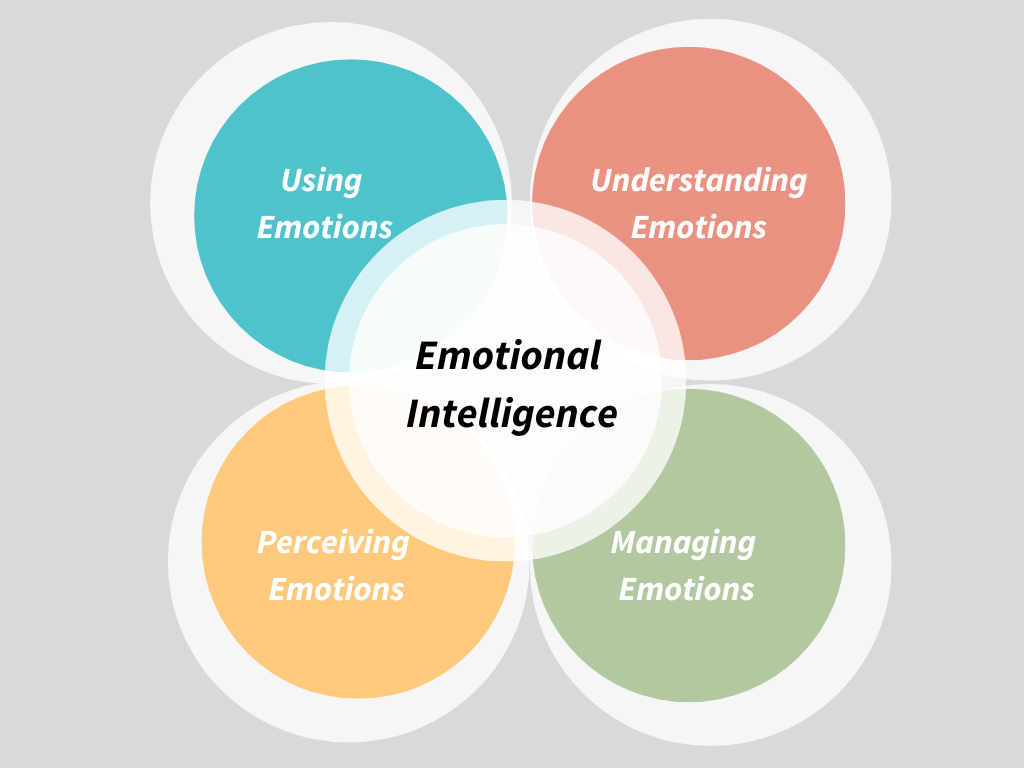
Most importantly, emotions should be acknowledged without being allowed to take control.
Fear, anxiety, anger, and grief often serve an important purpose by drawing attention to a concern, but once they have delivered their message, we can choose to respond with more empowering emotions such as courage, curiosity, confidence, motivation, and hope.
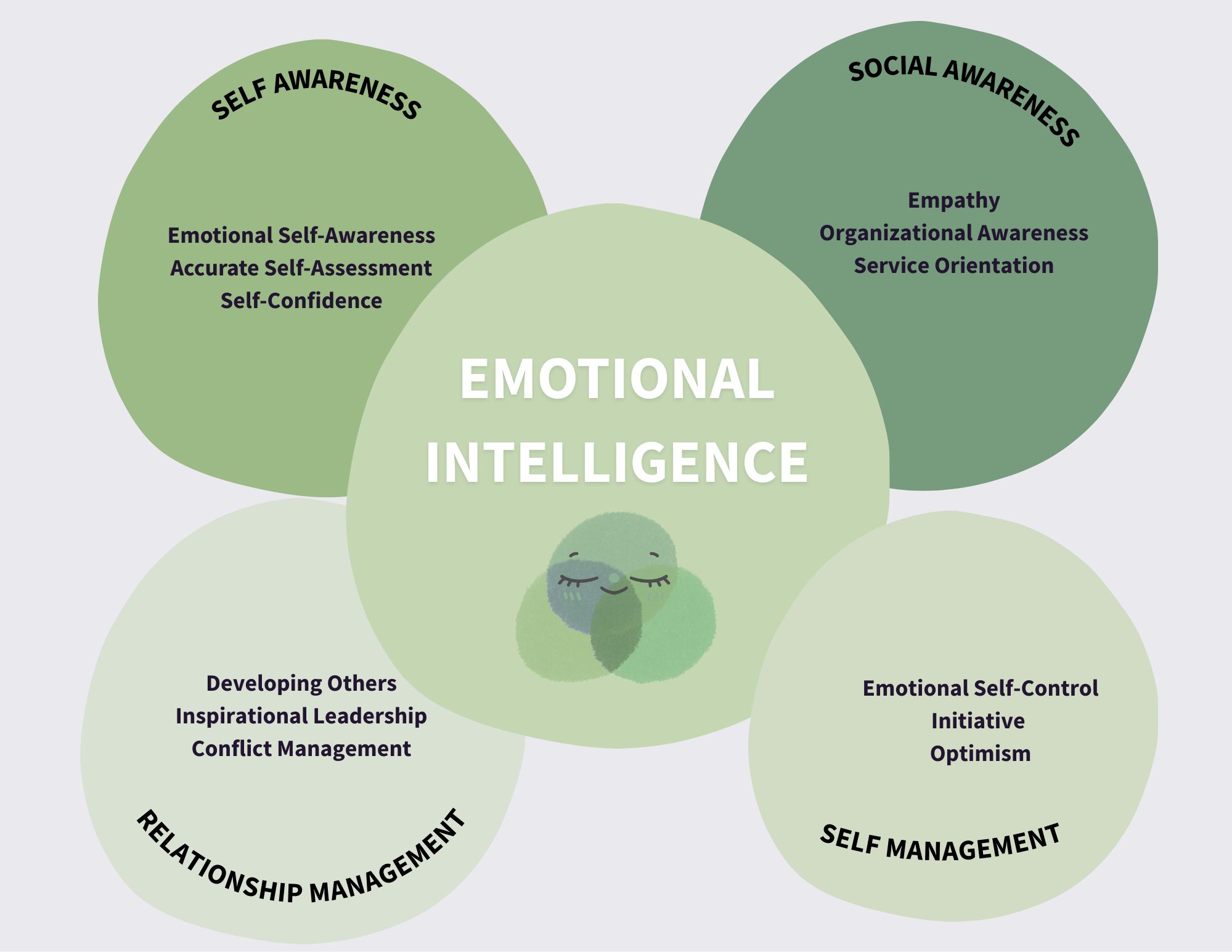
Emotional intelligence is ultimately a skill that can be practiced and strengthened.
By learning to recognize our emotions, understand their causes, and respond thoughtfully rather than react impulsively, we become better equipped to make sound health decisions and continue moving toward healing—even when the journey feels uncertain.